
Increasing Funnel Completion in AI-Powered Outreach Generation
B2B / SaaS / Enterprise
Teams
Product Designer (me)
Product Owner,
Machine Learning,
Software Engineering
Customer Success
Timeline
4 Months
07/2025 - 11/2025
Status
Shipped
Problem Discovery
Only 18% of users were able to accomplish the task.
This indicates significant challenges in usability and engagement.
The highlights for the needs for improvement to reduce friction and support users in reaching their goals.
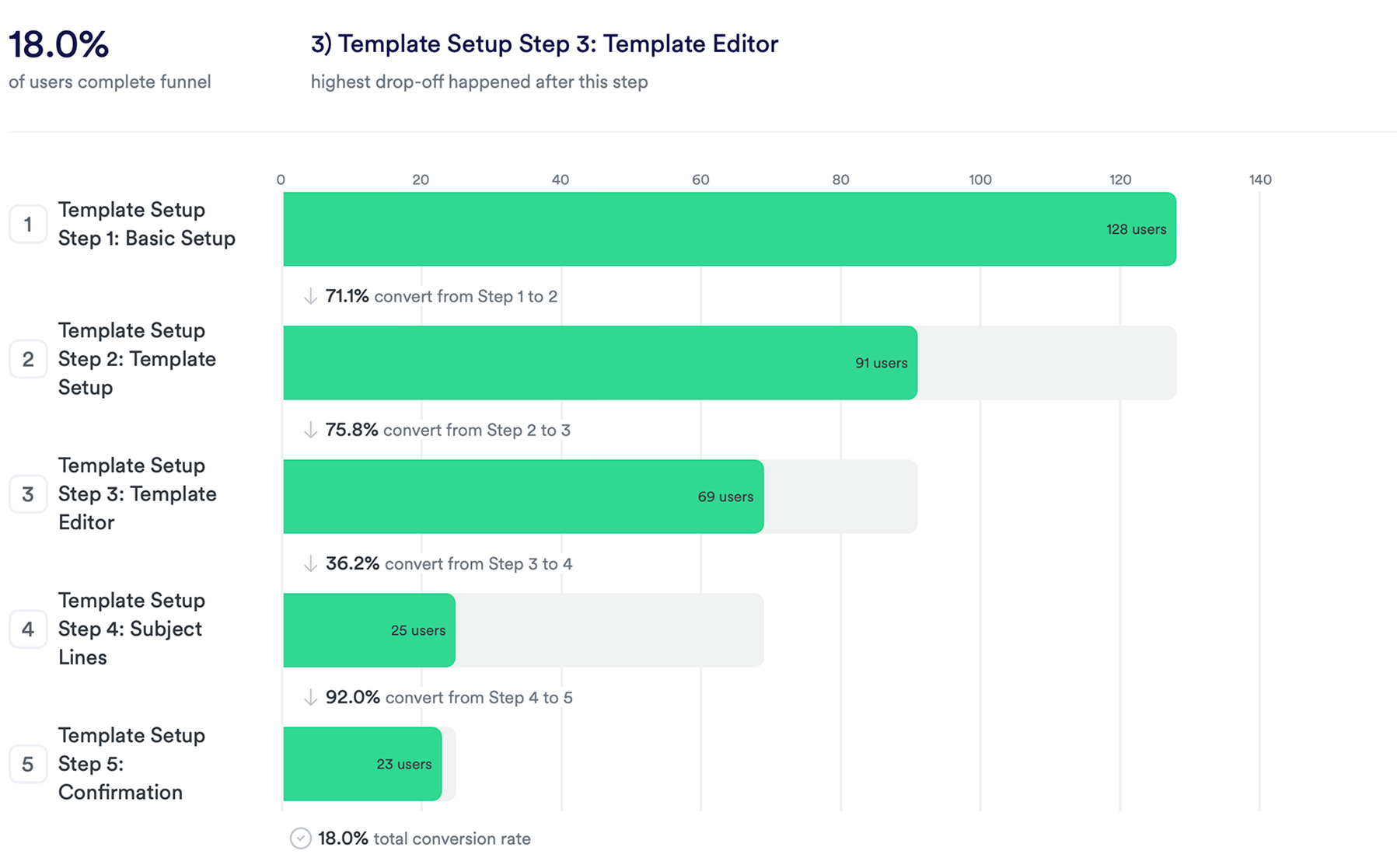
* Data measured through Heap Analytics
Reframing Problem
Users had clear expectations of how the AI “should” behave, but the design communicated different capabilities.
This created a gap that led to high drop-off rate.
* User Interview conducted with 7 Users.
THE APPROACH
1—
Notebook LM Prototype
Partnered closely with ML Team to validate hypothesis by testing
with LLM PrototypeDeveloped guided flows to help users start with confidence rather than facing an “empty prompt“
2—
Defining key features
Identified gaps between technical output and
user needs (unstructured responses)Visualize the platform’s structure, ensuring that it aligns with user needs and expectations.
3—
Implement & Eveluate
Iterated on multiple design directions before converging on the most intuitive interaction model.
Conduct usability testing with a diverse user group
USER EXPECTATIONS & PAIN POINTS
The AI Agent would automatically generate messages
More advanced UI instead of just “filling out forms“
Expectations
Having to write the outreach messages themselves after an extensive form-filling
Determining whether the generated outreach message is “good“ or “bad“ is difficult
Finding the perfect pitch is time-consuming and complex
Pain Points
Conducted 7 Interviews with new users and active users to identify expectations and pain points.
BUISNESS REQUIREMENT
Design a conversational workflow that aligns with user mental models of AI agents, delivering a 'wow' effect.
Conversational UI
HYPOTHESIS
Cognitive Load in Text-Heavy Workflows
Given that AI-driven outreach message generation is inherently text-intensive, I hypothesized that users would experience cognitive overload if presented with a dense, unformatted information architecture. To maintain engagement, the interface must prioritize scannability and progressive disclosure to help users digest complex data without feeling overwhelmed
VALIDATING HYPOTHESIS VIA LLM PROTOTYPE
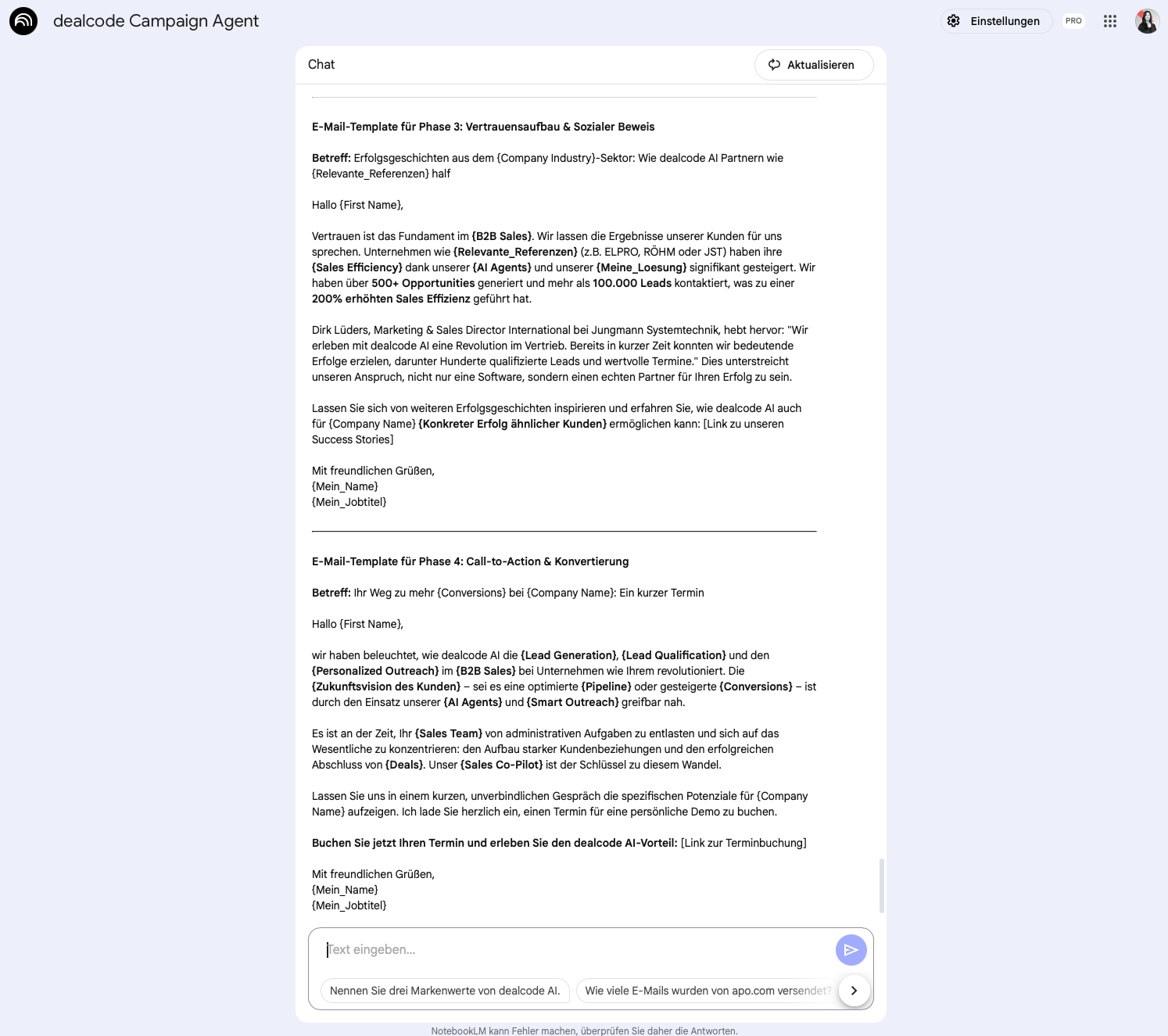
Explored NotebookLM Prototype provided by the ML Team, to assess technical constraints and identify opportunities.
The prototype demonstrated the ability to auto-generate outreach messages
Users were supported by a guided flow to structure their interaction with the AI
Strengths
Message generation and the chat-based UI were inherently text-heavy, leaving users overwhelmed by the amount of information they needed to process
Users were often dissatisfied with the AI-generated outreach messages as they were “too AI“, and the chat UI offered limited flexibility for editing content or managing placeholders.
Constraints
Tradeoffs&
Design Decisions
Introduce a structured message view that breaks AI output into scannable sections instead of a single text block.
Add inline editing and placeholder management option so users could quickly personalize AI drafts.
Conversion & Funnel Completion
Increasing the Funnel Completion Rate by reducing drop-offs during the multi-step message generation process.
Output Quality Alignment
Ensuring that the AI-generated outreach campaigns consistently meet our internal quality benchmarks, enabling users to launch high-performing campaigns with minimal manual editing.
Success Metrics
TECHNICAL FLOW & USER JOURNEY MAPPING
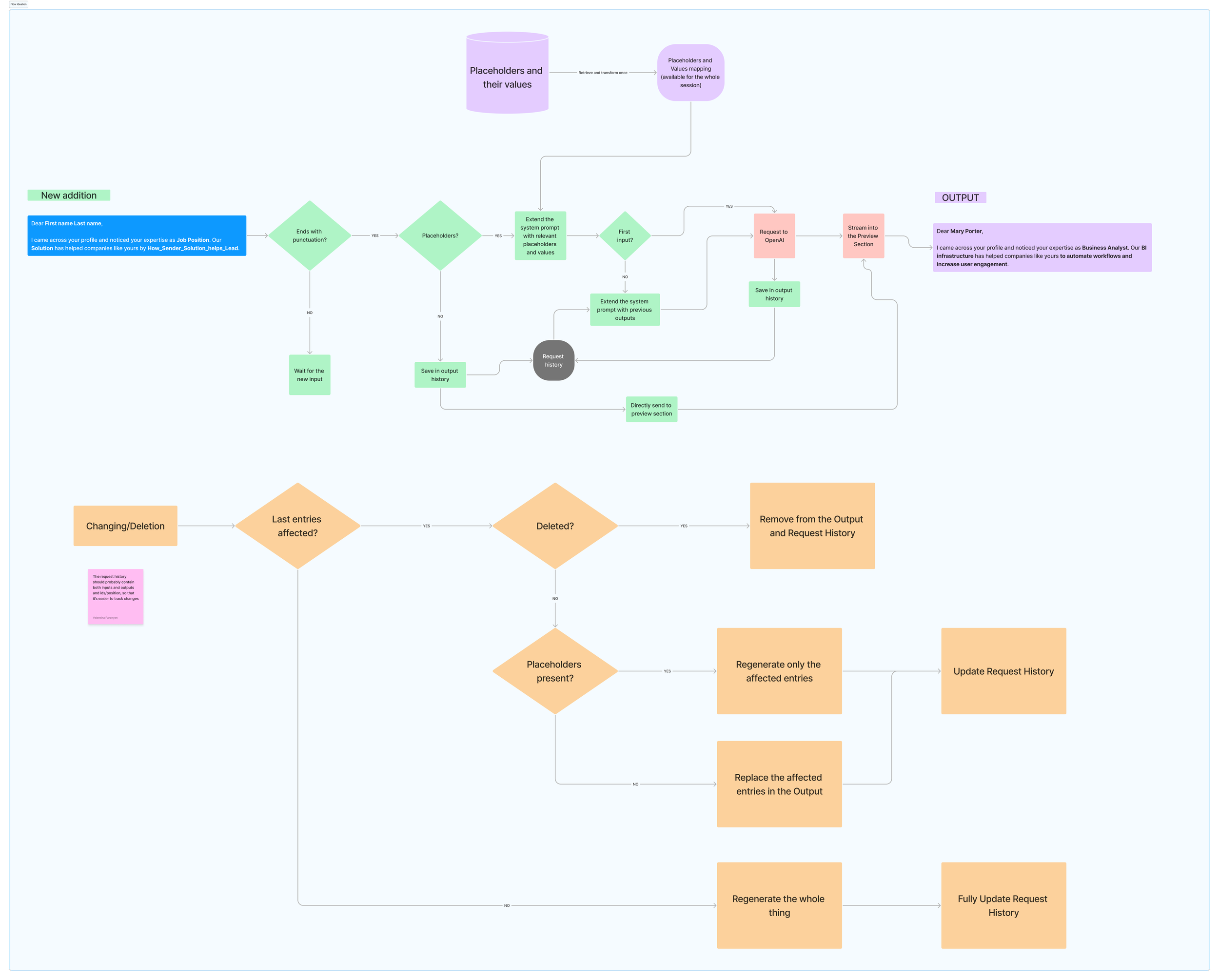
Technical Alignment with ML & Engineering
Designing the user flow required more than just mapping steps.
It meant balancing user needs with the technical realities defined by the ML and development teams. I worked closely with both to understand system capabilities, performance limits, and edge cases.
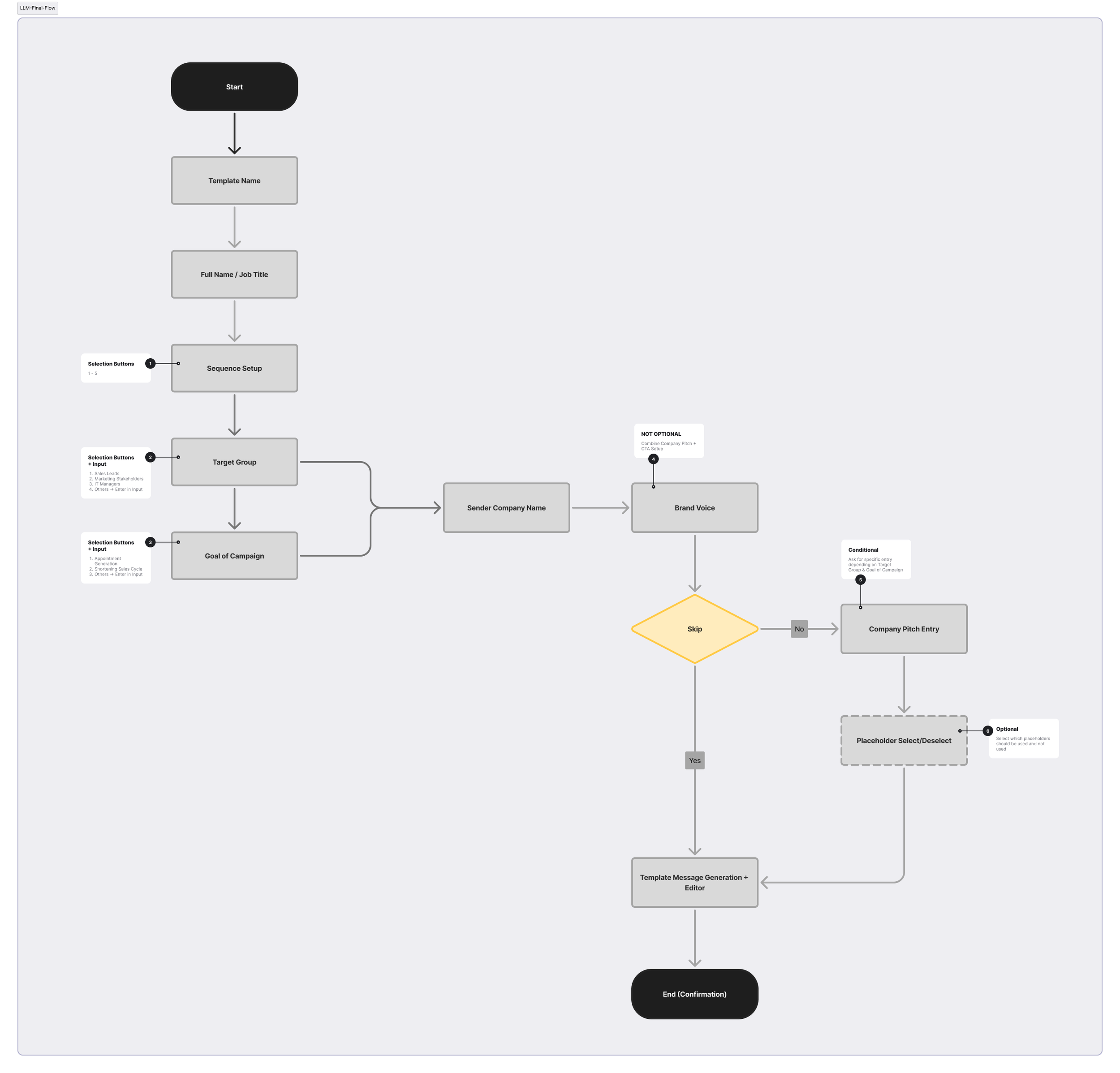
I designed user flows that balanced guidance for first-time users with efficiency for experienced ones. By structuring the process into clear, scannable steps — from selecting prompts to editing AI drafts — the experience became less overwhelming and more effective.
Final User Journey
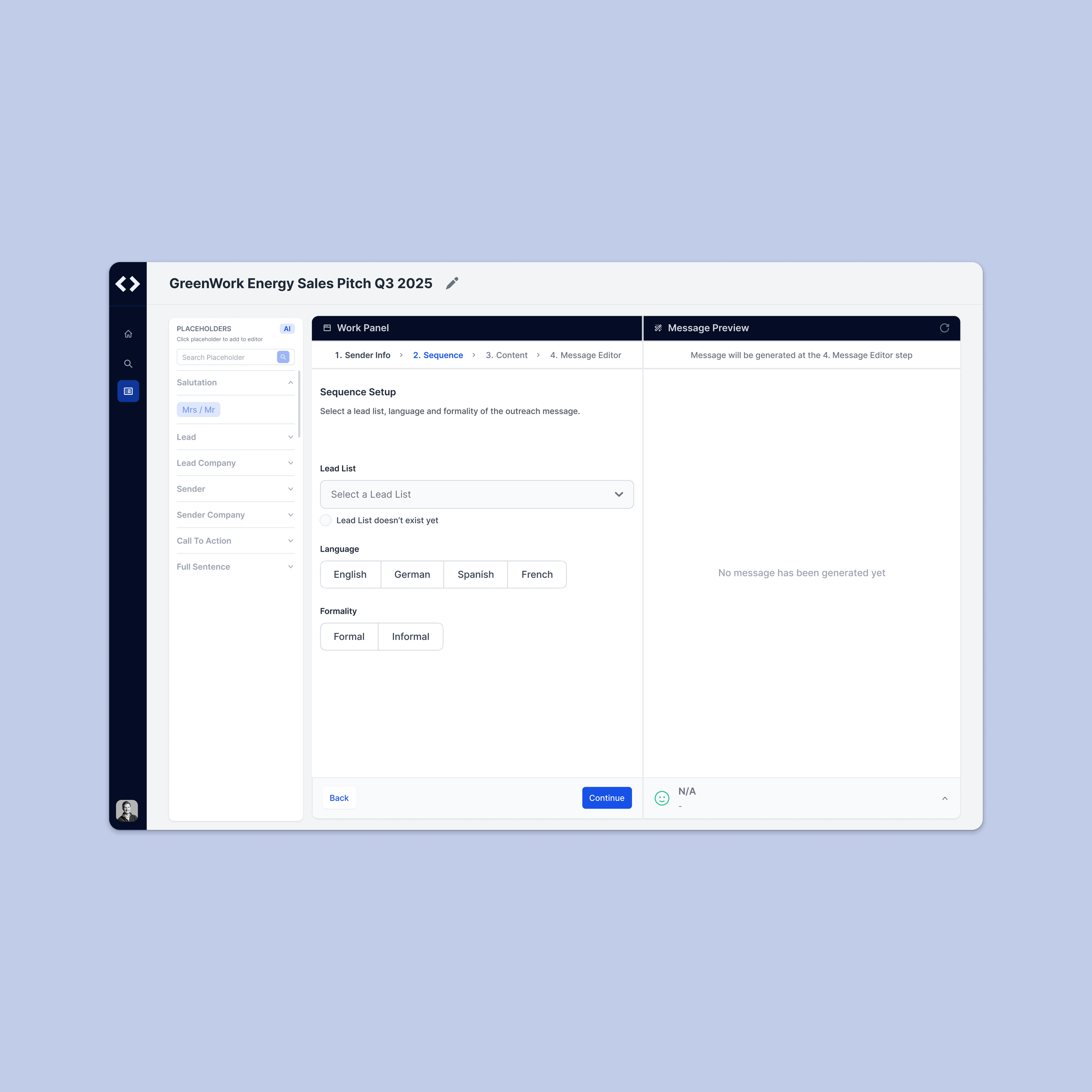
SOLUTIONS
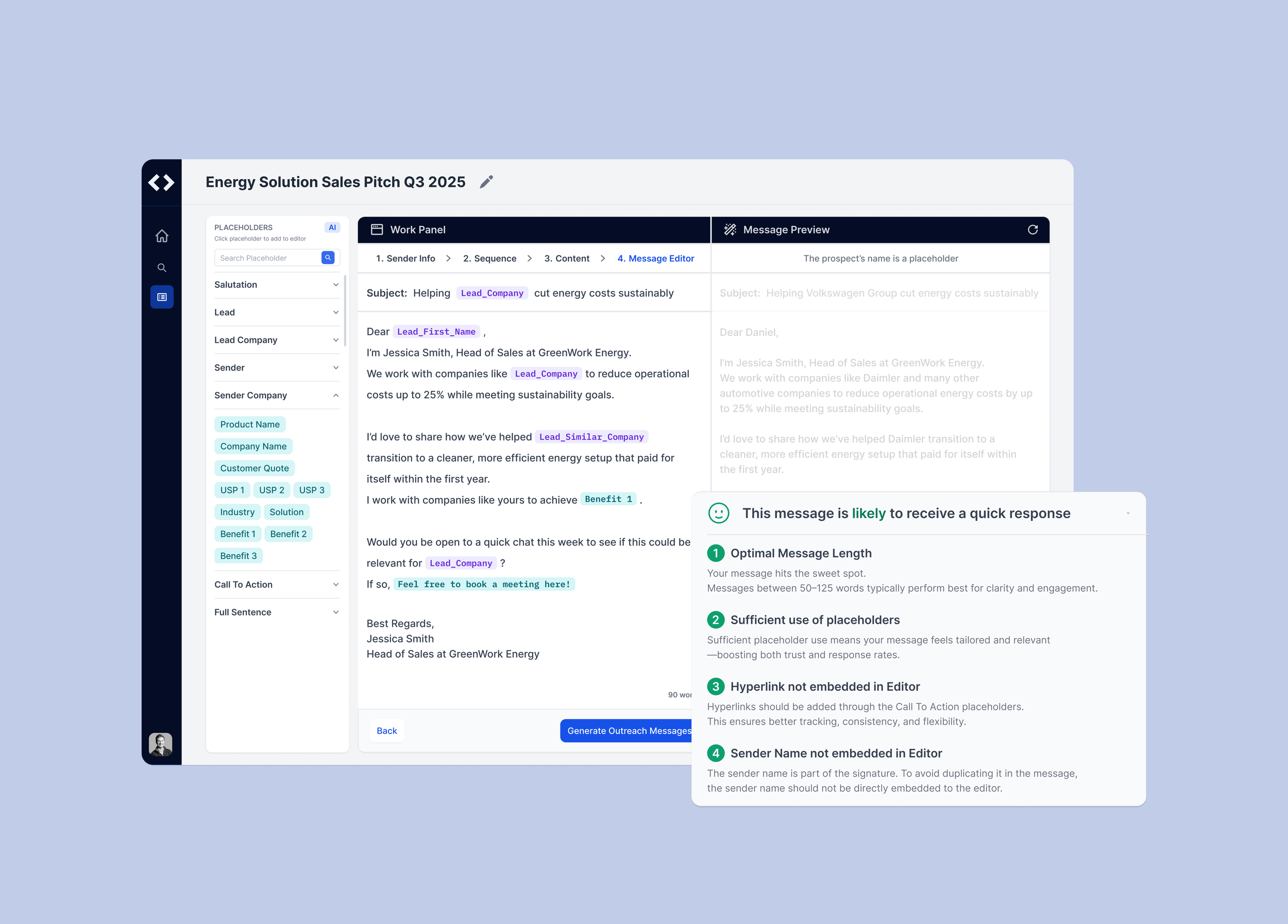
Replaced the open-ended chat interface with guided selections, allowing users to quickly define criteria for outreach message generation without starting from scratch.
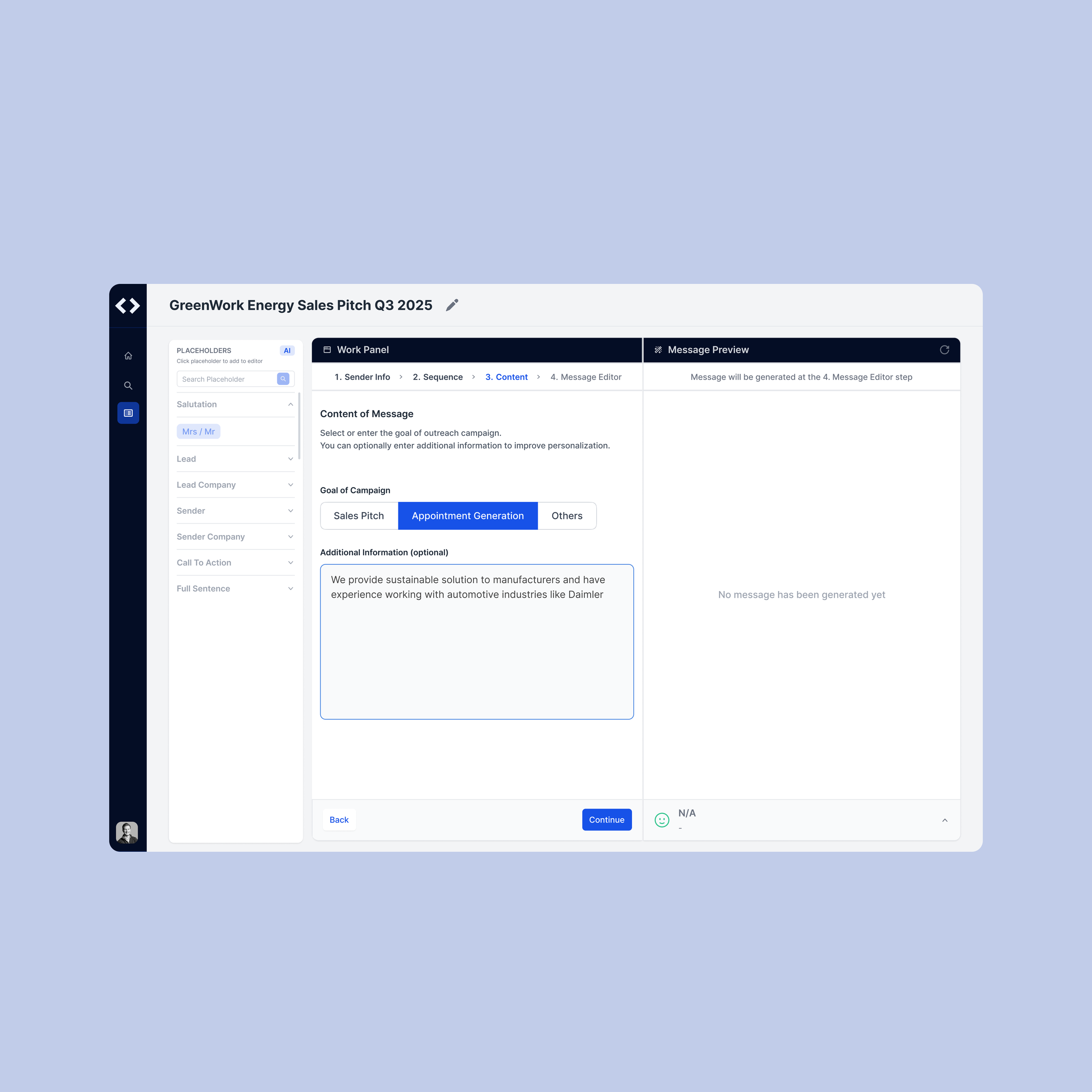
Retained the familiar form-filling flow, but streamlined it into concise, scannable steps to reduce effort and cognitive load.
Instead of the originally requested conversation-oriented user interface, the classic form interface was used for quick setup.
Guided Prompt Setup
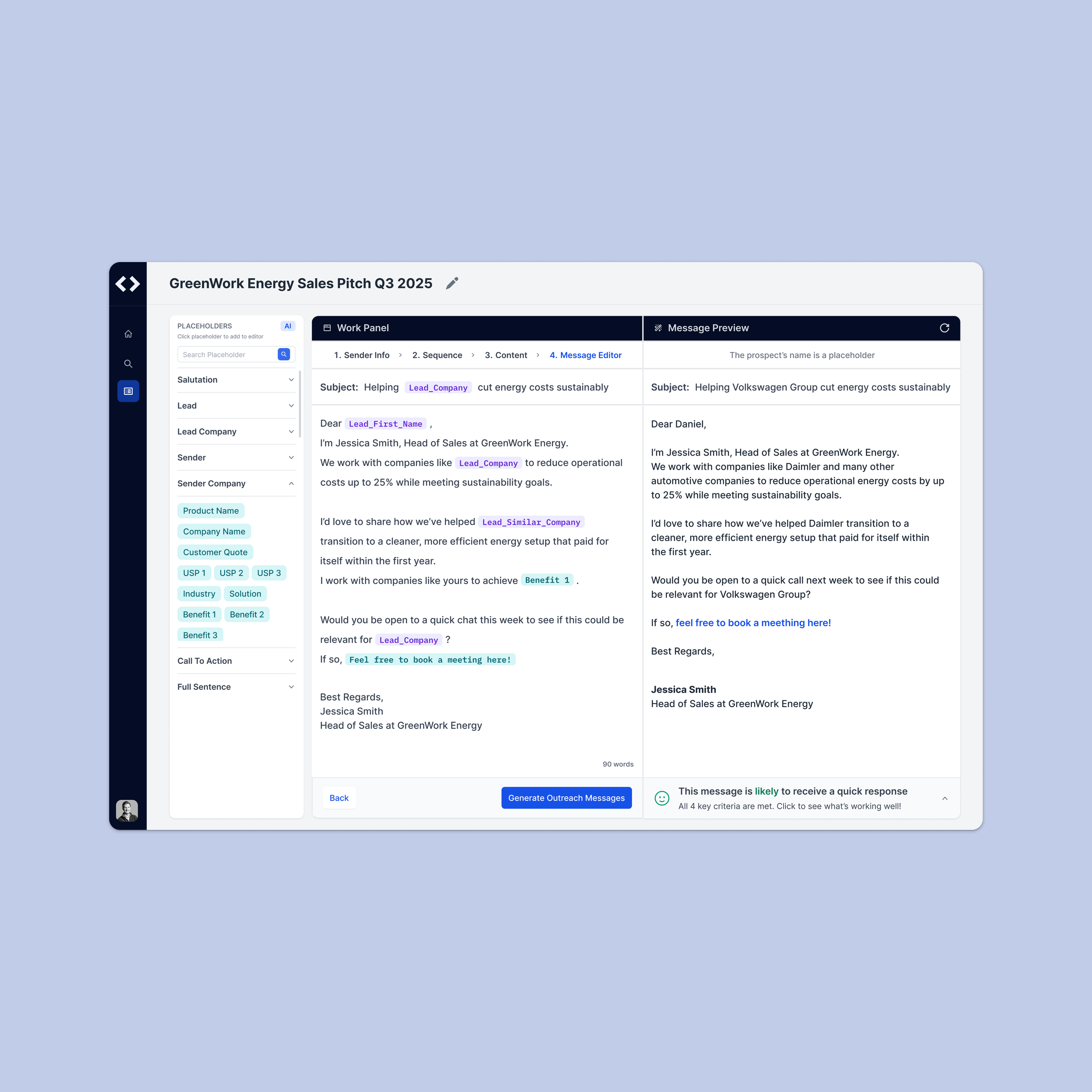
Once prompts are defined, the AI agent automatically generates outreach messages tailored to the chosen criteria. Instead of being locked into a static output, users are given full flexibility to refine the drafts — from adjusting tone and structure to managing placeholders — ensuring the final message reflects both the AI’s efficiency and the user’s personal touch.
Outreach Message Editor
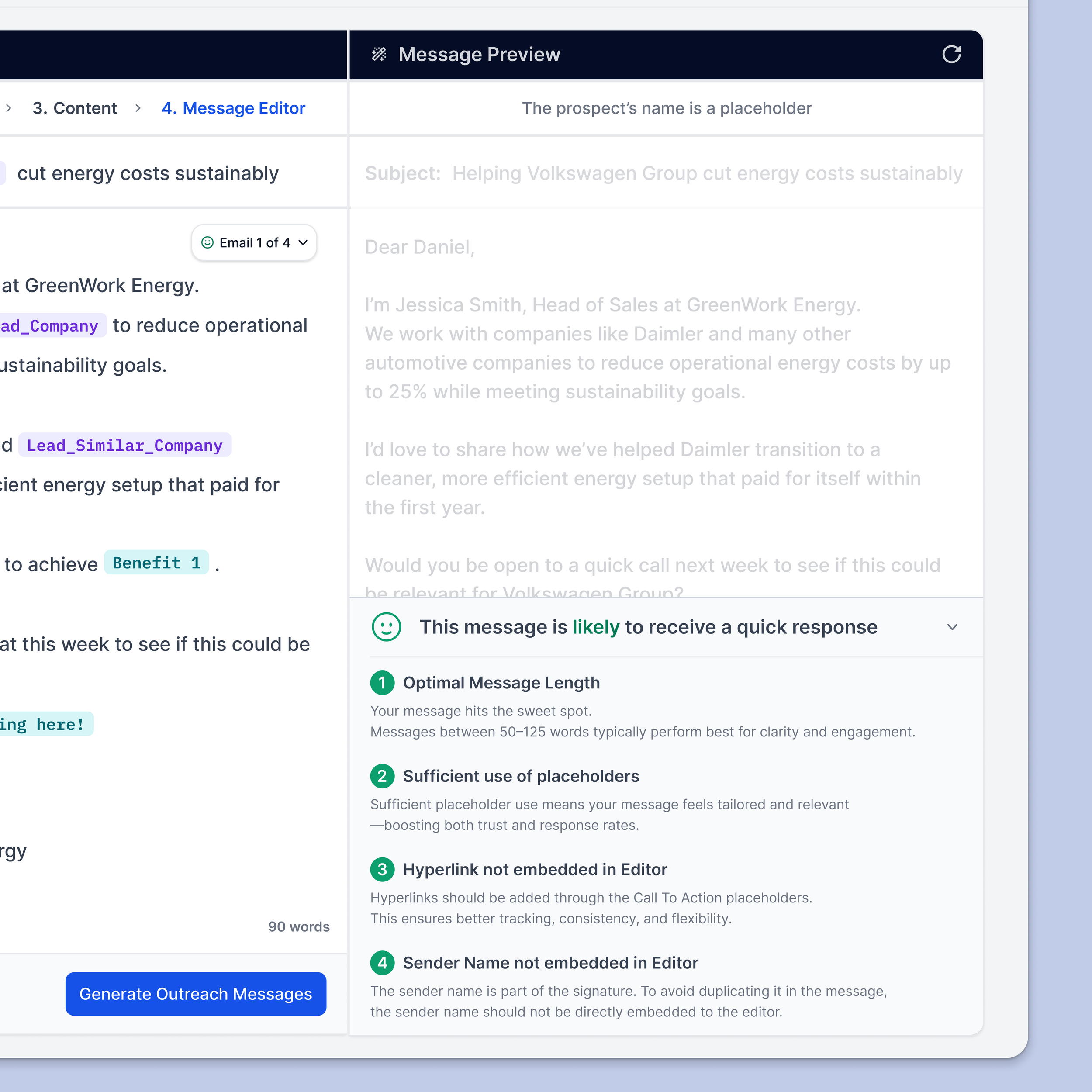
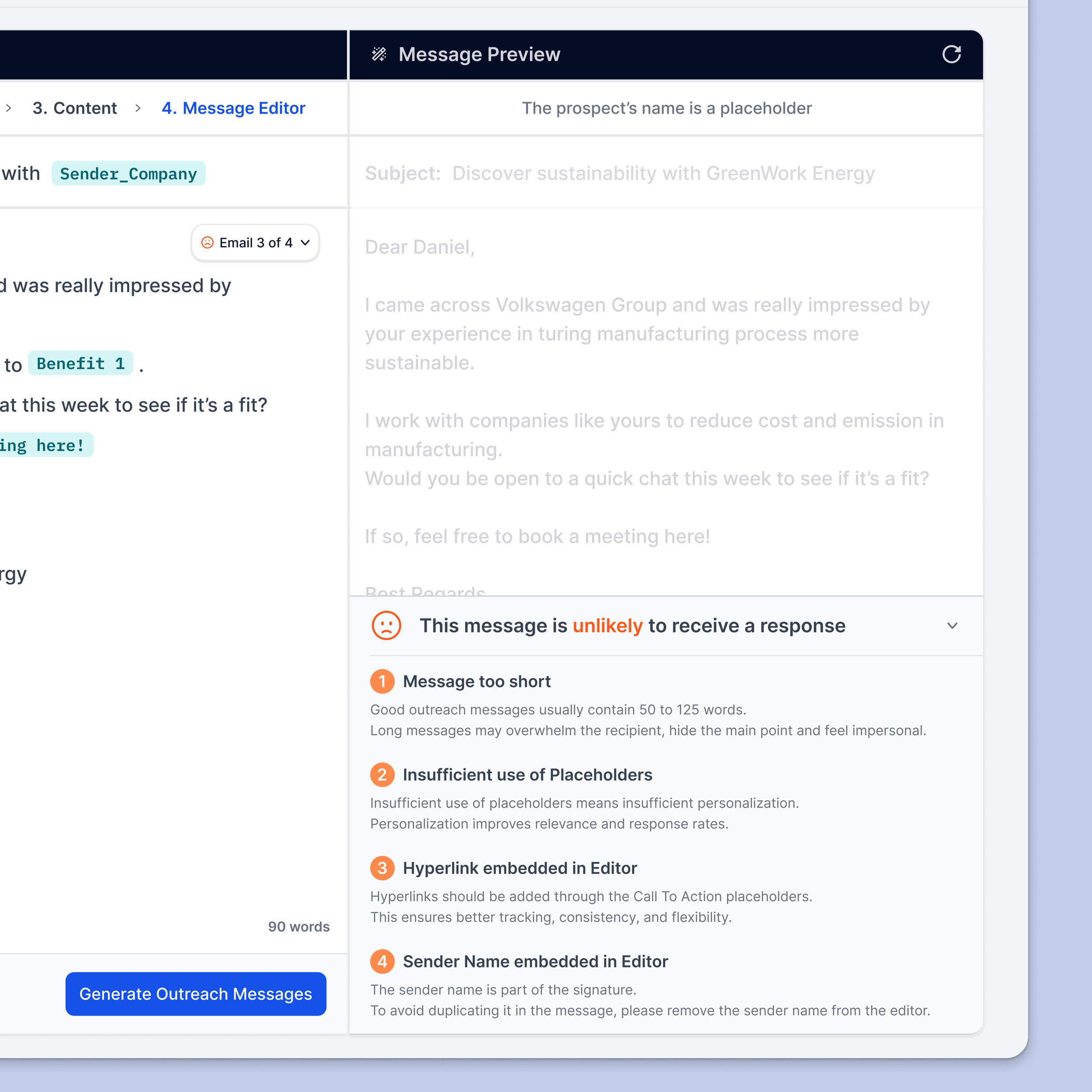
Ensuring message quality
with live-time checklists
Because the message editor allowed full freedom to modify AI-generated drafts, there was a risk of users creating ineffective outreach messages. To address this, we introduced a safeguard: four key criteria evaluated in real time by the backend. These checks guided users as they edited, ensuring their final messages met standards for clarity, relevance, and overall effectiveness
RE-ENGAGING USERS AFTER AI TASKS WITH NOVU
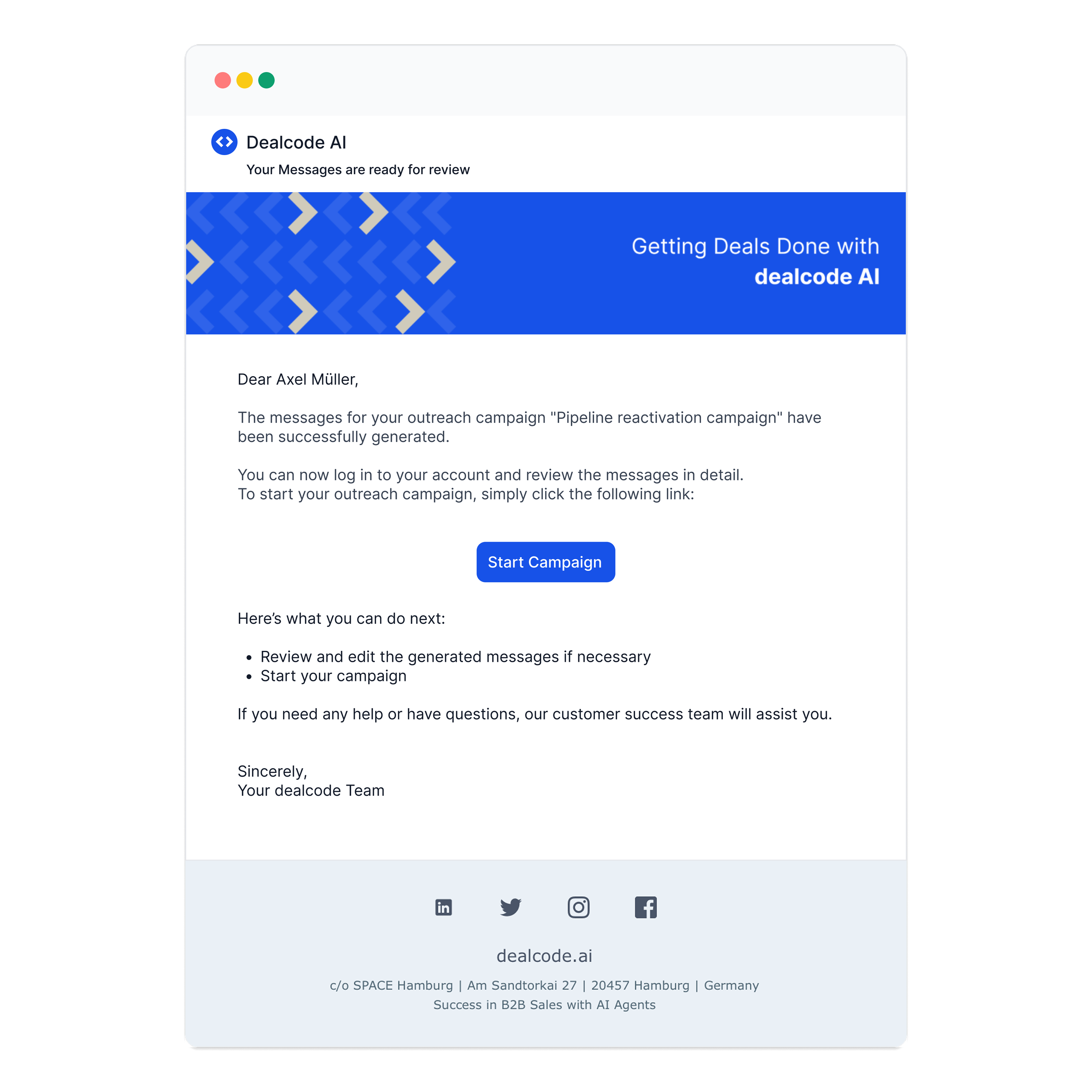
Using Novu to Re-trigger User Action
Since AI message generation can take several hours, the primary challenge was the inevitable break in the user session. To bridge this interaction gap, I designed an automated notification strategy using Novu. This ensured that once the 'asynchronous task' was complete, users were seamlessly brought back to the platform to finalize their campaign scheduling, transforming a potential drop-off point into a continuous workflow.
RE-ENGAGING USERS AFTER MESSAGE GENERATION
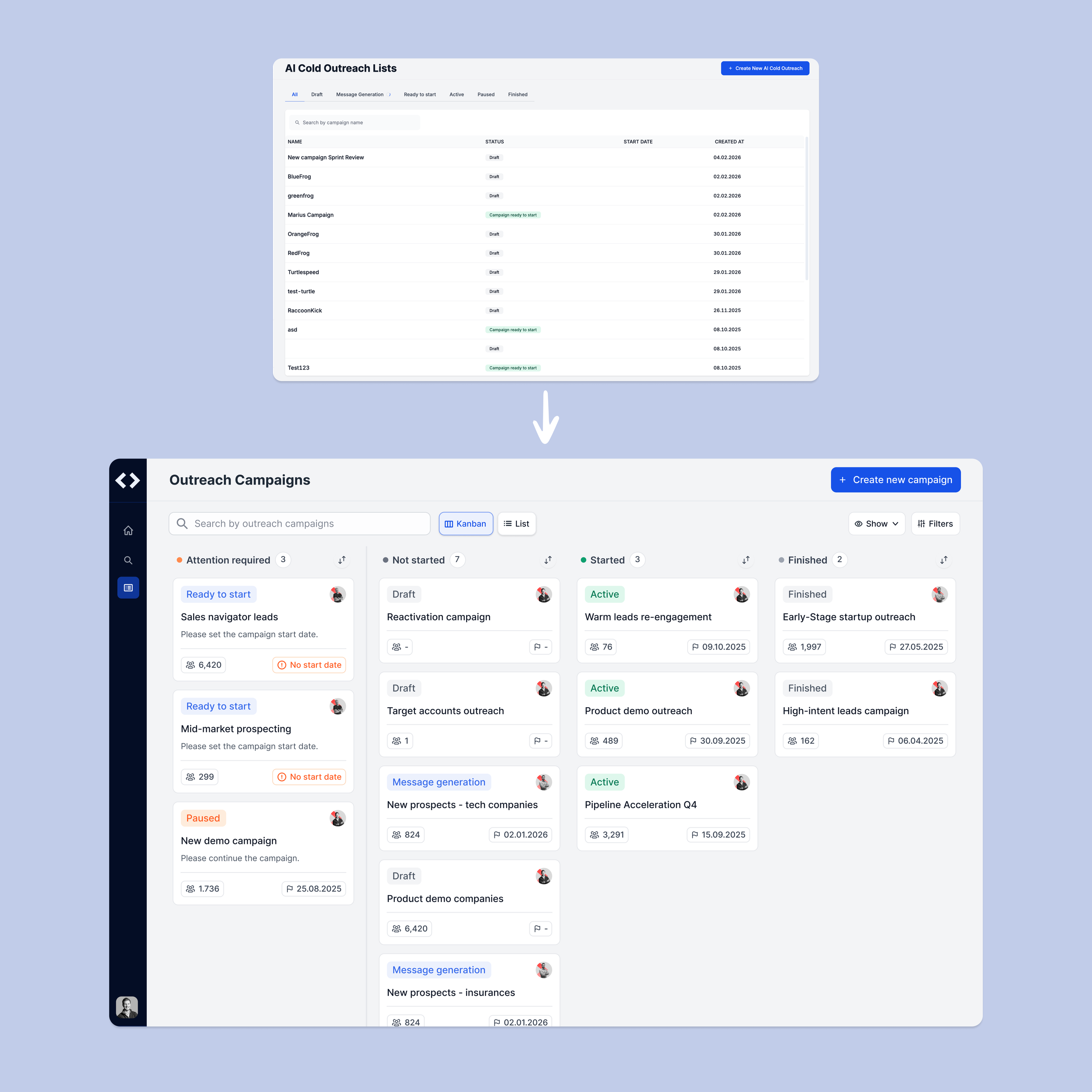
From Static List to Action-Oriented Kanban
In the previous design, all campaigns were listed in a single table without clear status differentiation, creating significant cognitive load for users. It was nearly impossible to identify which campaigns required immediate intervention.
I redesigned this into a Status-based Kanban view to visualize the campaign lifecycle more effectively. The centerpiece of this redesign is the 'Attention Required' column, placed at the far left to immediately surface campaigns with missing start dates or critical errors. By transforming raw data into a prioritized task list, I enabled users to focus on high-impact actions rather than searching through rows, significantly increasing the overall operational efficiency of the platform
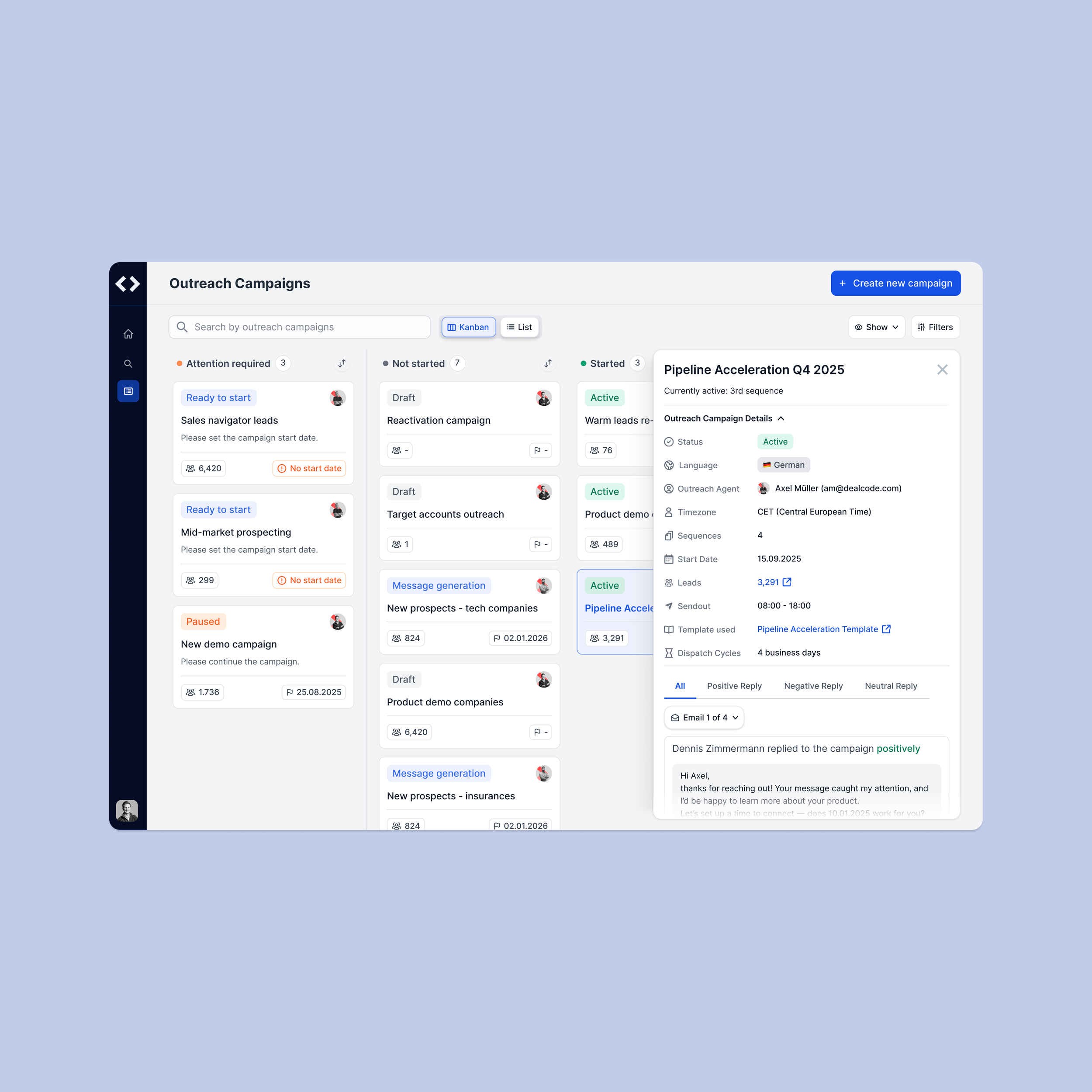
Detailed information of the outreach campaign is displayed upon clicking of an outreach campaign on the list.
Play with Prototype ↓
MODULAR DESIGN SYSTEM
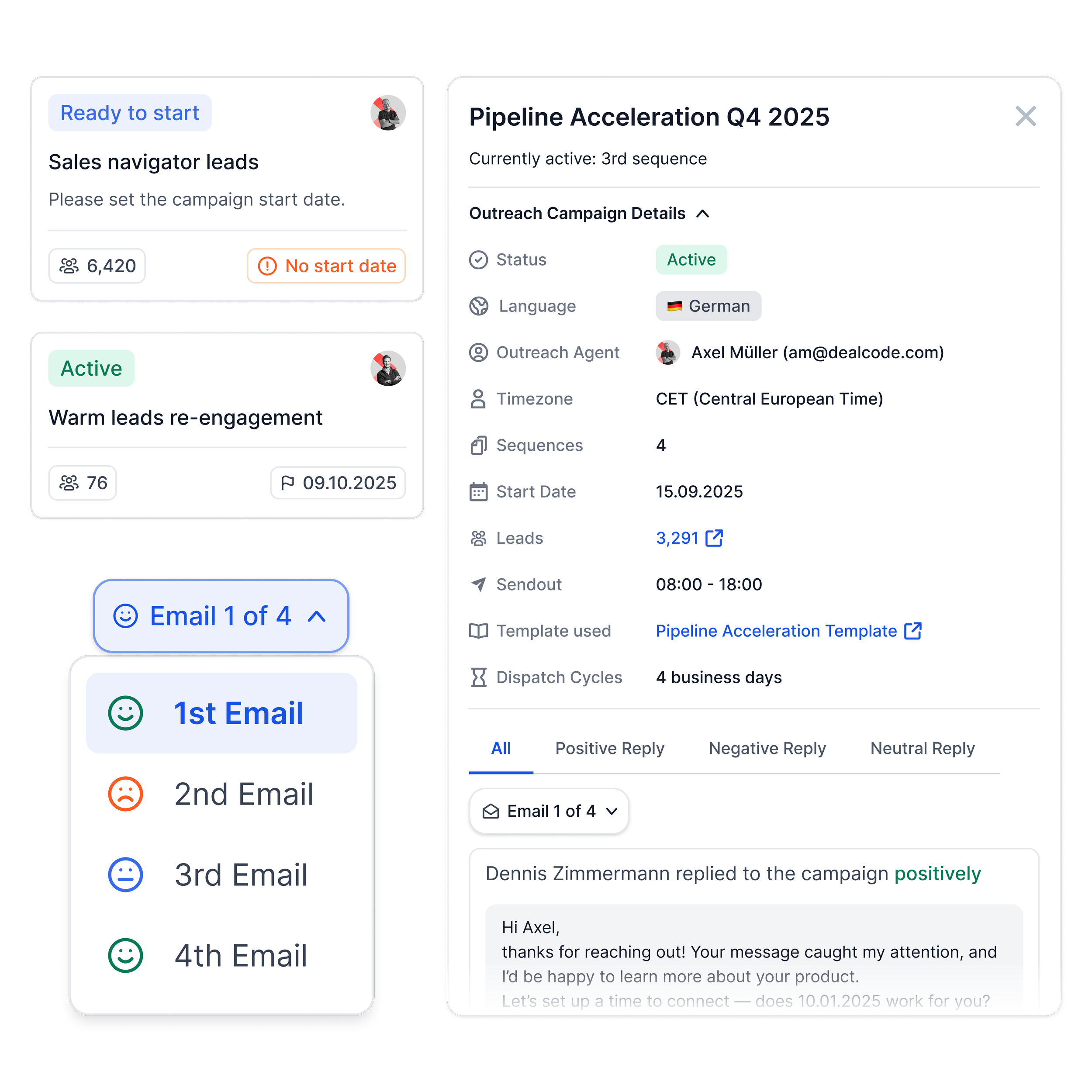
Modular components for scalable engineering
To ensure both design consistency and development velocity, I architected a modular design system rooted in Atomic Design principles. By breaking down complex interfaces into reusable atoms and molecules, I enabled a "plug-and-play" workflow that allowed for the rapid recombination of components across diverse AI features. This granular approach not only minimized design debt but also significantly reduced engineering overhead, allowing developers to ship high-fidelity screens faster with pre-validated, modular code.
OUTCOME
The Redesign increased the funnel completion rate by 71,5%, from 18% to 89.5%.
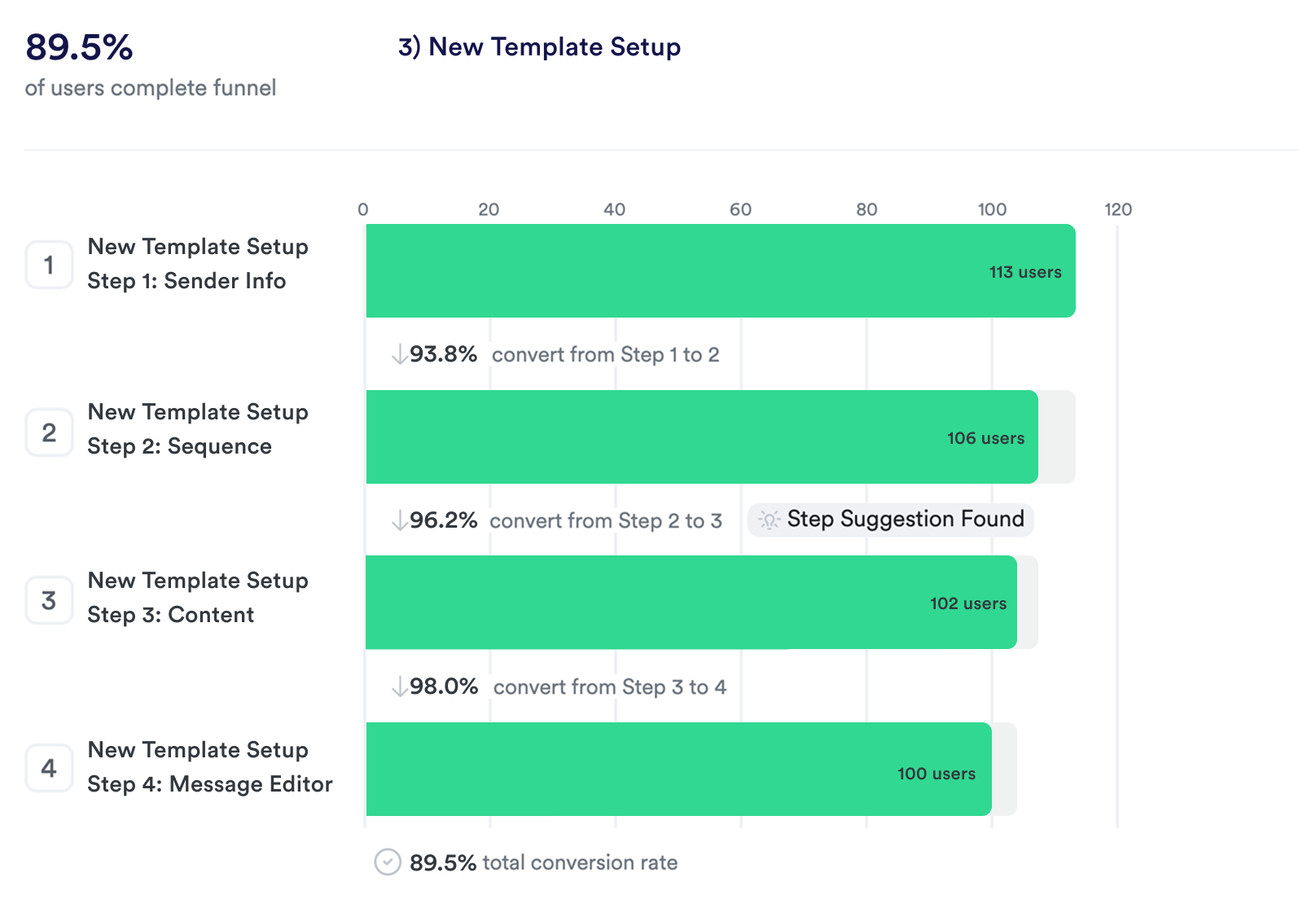
* Data measured through Heap Analytics
Conclusion & Learnings
This project showed me what it truly means to design for AI.
From translating complex, probabilistic systems into clear and trustworthy user experiences.
Close collaboration with both the ML team and developers was key. Aligning technical capabilities with user needs and ensuring feasibility.
It reinforced my role as a product designer not just as an interface creator, but as a translator and strategist, shaping how humans and AI work together effectively.